the woman who found the tumor that wasn’t leukemia
Dr Sarah Stewart
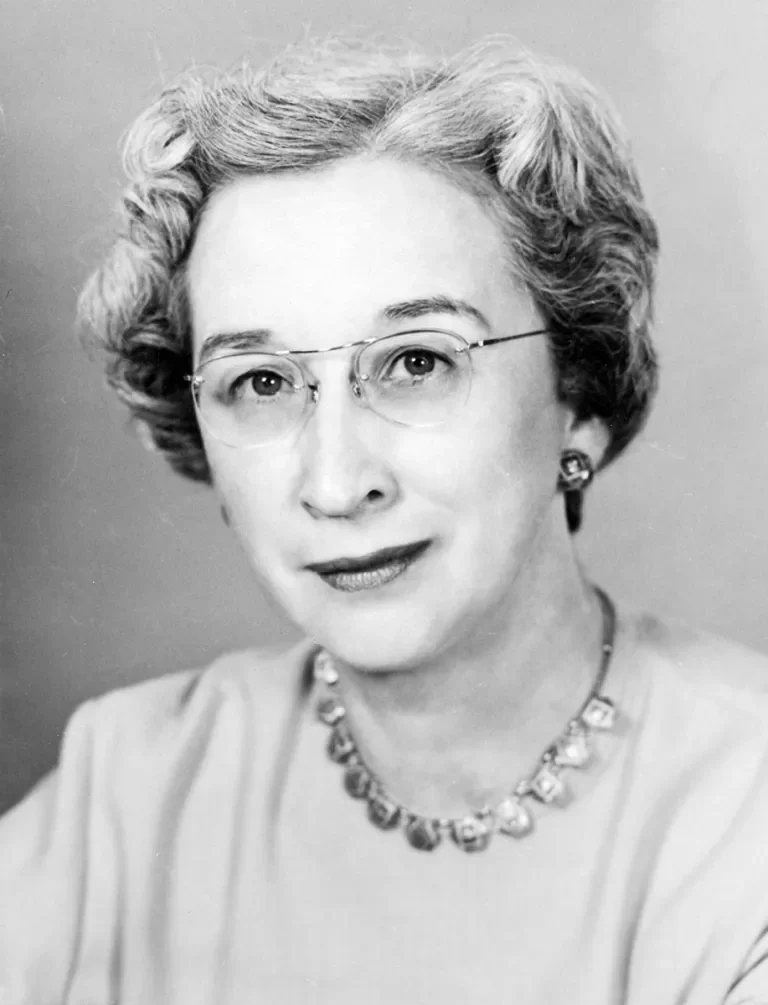
Dr Sarah Stewart, ca 1963
image credit: National Library of Medicine
In February 1964, a historian from the NIH National Cancer Institute sat down with Sarah Stewart to record her life for the archive. She stepped away from her work for the interview, even though she was in the middle of something so exciting she and her assistant "could hardly sit in their chairs". She briefly considered that she shouldn't be reporting it this prematurely, but shared it at a virology meeting the previous Monday anyway.
She answered the historian's questions about her career with the economy of someone who had moved on from every chapter the moment it closed. She said she forgot the things that were disagreeable. It was water under the bridge.
She was 58 years old, but she had already changed cancer research forever, and she still wasn't finished.
picking places at random
Stewart was born in Tecalitlán, Jalisco, Mexico in 1905, the daughter of an American mining engineer and a Mexican mother. After the Mexican Revolution pushed the family out of Mexico in 1911, they relocated first to Oregon, then to New Mexico. "There were four of us going to college," she said later, "and so my folks moved to a college town."
When she enrolled at what is now New Mexico State University, the best major available to women at an agricultural school was home economics. So thats what she enrolled in. She also took every science course she could find alongside it, went to summer school every summer, and was able to graduate with a second bachelor's degree in general science.
But teaching home economics was the only opening available to her after graduation, which she did for only a half a year before she'd had enough. She applied for fellowships "just picking places at random over the country", and ended up in Massachusetts, where she earned a master's in microbiology.
The masters led to a job in Colorado doing soil bacteriology, work she wasn't interested in, so after three years she enrolled in a PhD program in Fort Collins. But just two years into the degree, and on a whim during a 1935 visit to Washington, Stewart applied for a job at the NIH. She got a got a position, but there wasn't any funding yet. So she spent her first six months back at the NIH working without pay in Ida Bengtson's anaerobic bacteriology lab. "I was a dollar a year man," she said, then corrected herself: "I stretched that, it was six months. It seemed like a year."
When she finally got on salary, it was because someone had died. Anna Pabst, a respected meningitis researcher, had been killed by a lab accident that occurred on Christmas night 1935. A rabbit moved while she was inoculating it, and the culture sprayed into her eyes. So the salary opened up. "It's kind of bad to be put on that way," Stewart said.
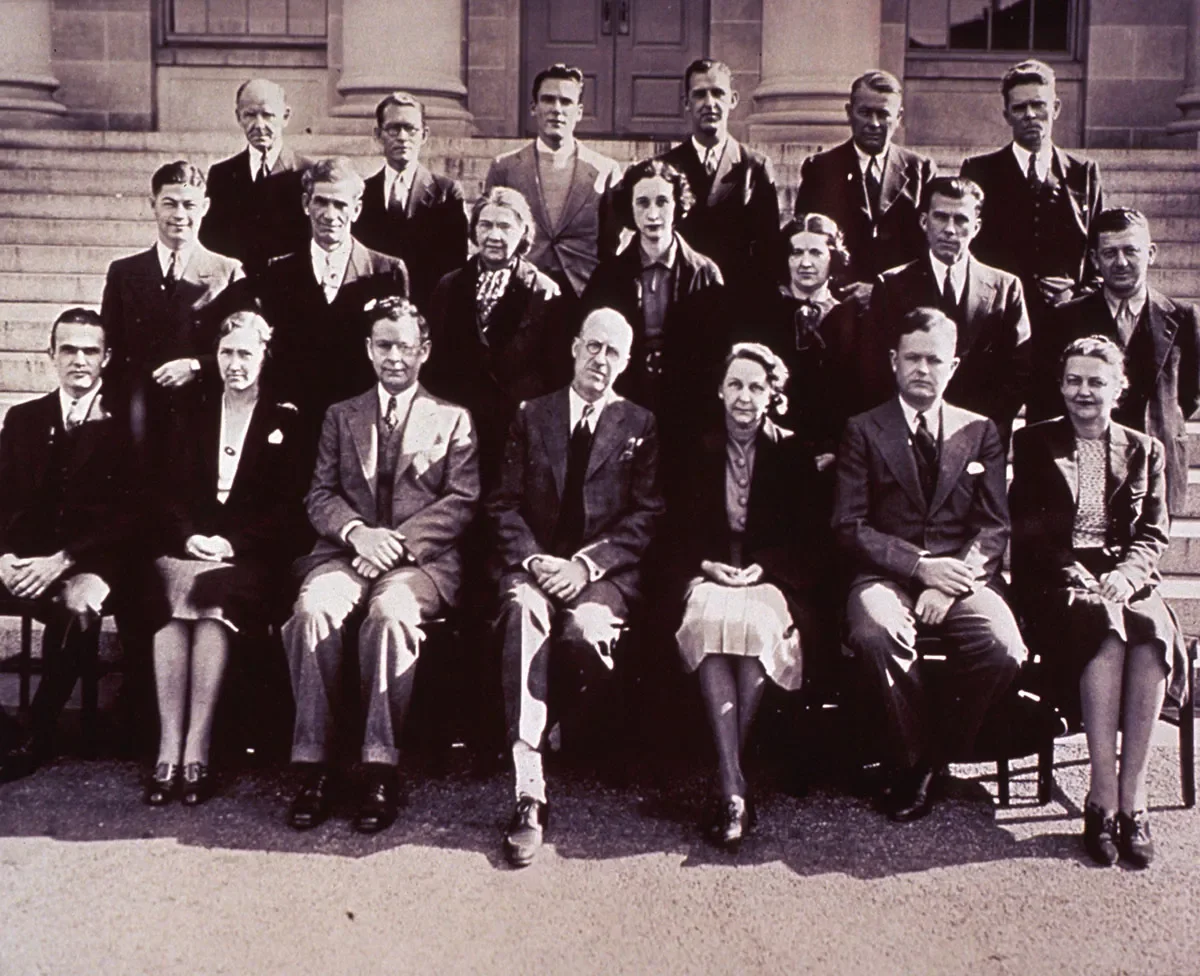
Staff of the Laboratory of Biologics Control, 1938. Sarah Stewart, middle row fourth from right. Bernice Eddy, front row far right.
image credit: National Library of Medicine
She took the salary, finished her PhD while working for the NIH, and spent the next decade working on anaerobic bacteria, toxoids and other critical wartime research. Again, she was good at it, but didn't particularly want to do it.
What she wanted to do was explore the link between viruses and cancer.
obviously too complex
At the time, saying that a virus could cause cancer was not just a fringe position it was an embarrassing one. The germ theory of disease had been settled for decades. And cancer was understood as a cellular malfunction, something that happened inside the body, not something that arrived from outside it. So the idea of an infectious cancer felt almost medieval, a step backward into a time before science had learned to distinguish between contagion and coincidence.
It had been suggested before, however. Francis Peyton Rous suggested in 1911 that a virus could cause tumors in chickens, and the field had spent forty years treating it as a niche curiosity of bird biology. Ludwik Gross revived the question in the early 1950s with mouse leukemias, and his colleagues greeted it with the same skepticism. Serious and respected scientists felt cancer was obviously too complex of a disease to have a viral cause.
When Stewart told the NIH this was what she wanted to study, they told her that she lacked the qualifications to work on cancers. So she left.
it was a gamble
Stewart took a position as a bacteriology instructor at Georgetown University Medical School because they hadn't yet started to admit women. She never registered as a student, but for two years she audited courses, sat examinations alongside students who were officially enrolled, and waited. "If they had changed their mind, I would have had nothing for the time I was there," she said. "It was a gamble." When Georgetown went coeducational in 1948 she registered for her junior and senior years and graduated in 1949 as the school's first female MD. A degree she had never really wanted and never planned to get. "I'm not interested in the medical degree," she had told herself. Then she ended up with it.
She was 44. She had a PhD, an MD, and a protocol for cancer virus research that NIH still hadn't agreed to fund.
So when the director of the NCI agreed to let her pursue her cancer work once she finished her internship, she took the temporary gynecology posting on Staten Island without complaint. The assignment wasn't what she wanted, but she knew how to keep moving until the right door opened. She'd done it before.
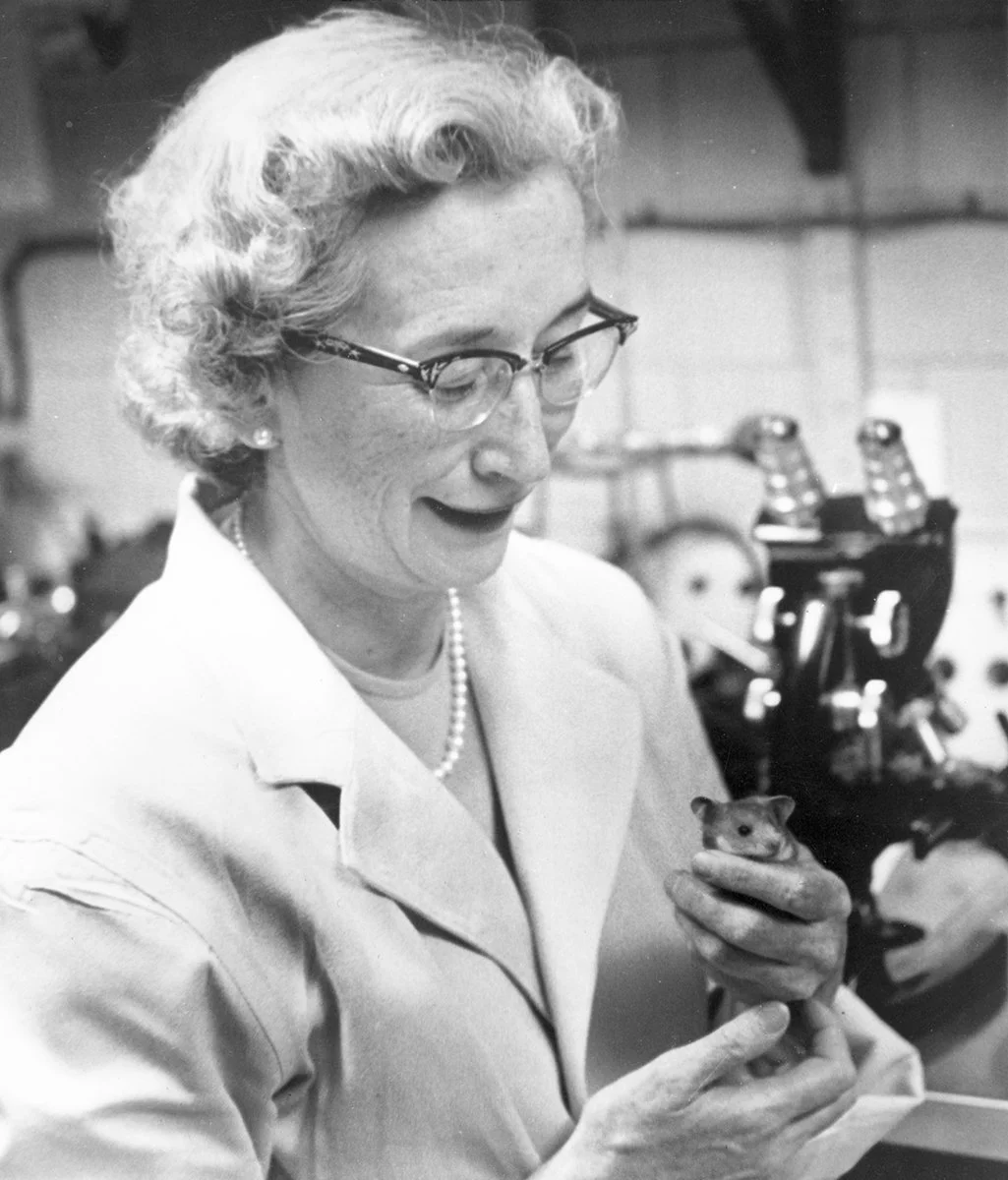
Dr Sarah E. Stewart in her laboratory.
image credit: New Mexico State University, Hobson-Huntsinger University Archives
something else
Fortunately, the door quickly opened at Baltimore Marine Hospital. The NIH hired her back to try to confirm Gross's mouse leukemia findings, and for once the work in front of her was the kind of work she'd been chasing for a decade. She inoculated mice with material from leukemic animals, expecting leukemia. What she got instead was something else: spontaneous tumors of the parotid gland.
For three years, Stewart tried to collect irrefutable evidence of her findings. She was certain she was on the right track, but she had no way to prove it without a tissue culture lab, and no lab at the NIH had the room or inclination to join in with her. So she went looking for someone who would.
Eddy
Bernice Eddy had just lost her own laboratory for being right about something nobody wanted to hear. She'd flagged contamination in an early polio vaccine batch, and the warning cost her the work rather than earning credit for the catch. She was recovering from the bruises to her career and had exactly the skill Stewart needed. She joined in.
By 1957 the pair had the virus growing in tissue culture. They were able to prove that it produced not one, but twenty types of tumors across three species. Eddy gave it the name 'polyoma', from the Greek for 'many tumors'. The two of them called it the "SE virus" for their two last names, but they didn't dare to call it a virus in print until 1959.
"The whole place just exploded after Sarah found polyoma," a senior NCI pathologist later recalled. Time Magazine ran a cover story in 1959. The NCI director called viral cancer research "the hottest thing in cancer research." Then the prizes started arriving:
the Lenghi Award from Rome's Accademia Nazionale dei Lincei, the Federal Women's Award presented by President Johnson in 1965. Stewart and Eddy were nominated for the Nobel Prize twice.
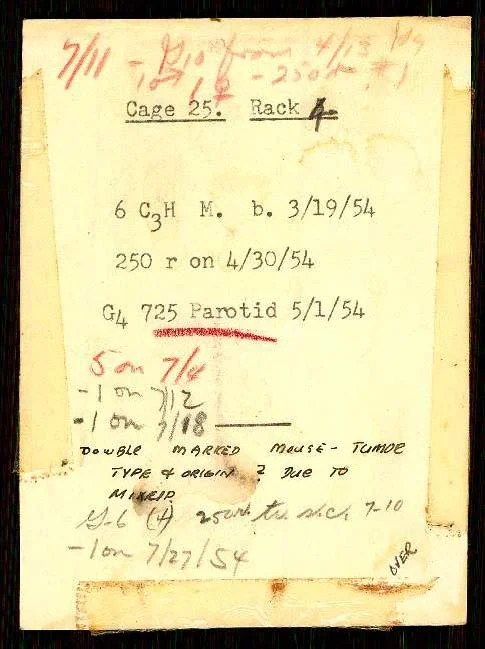
Lab notes, leukemia, 1953-1954
image credit: Sarah E. Stewart Papers, National Library of Medicine
the legacy
None of the prizes were really the point, and Stewart said so herself, more or less, by never dwelling on them. The point was what the polyomavirus made possible once it existed as proof rather than theory. If one virus could be shown to cause cancer and move between animals, then the question everyone had been too embarrassed to ask out loud stopped being embarrassing. "Can viruses cause cancer in humans?" became the obvious next question.
Two decades later, that question is what let researchers identify the human papillomavirus as a cause of cervical cancer, and from there build a vaccine now given in the hundreds of millions of doses worldwide. Seven human viruses are now established causes of cancers, responsible for one in ten cancers worldwide, from Epstein-Barr to hepatitis B, to new polyomaviruses found in Merkel cell skin cancer. None of that starts without two women working a problem nobody else wanted, in a lab they had to find for themselves.