the woman who mapped meningococcus
Dr Sara Branham
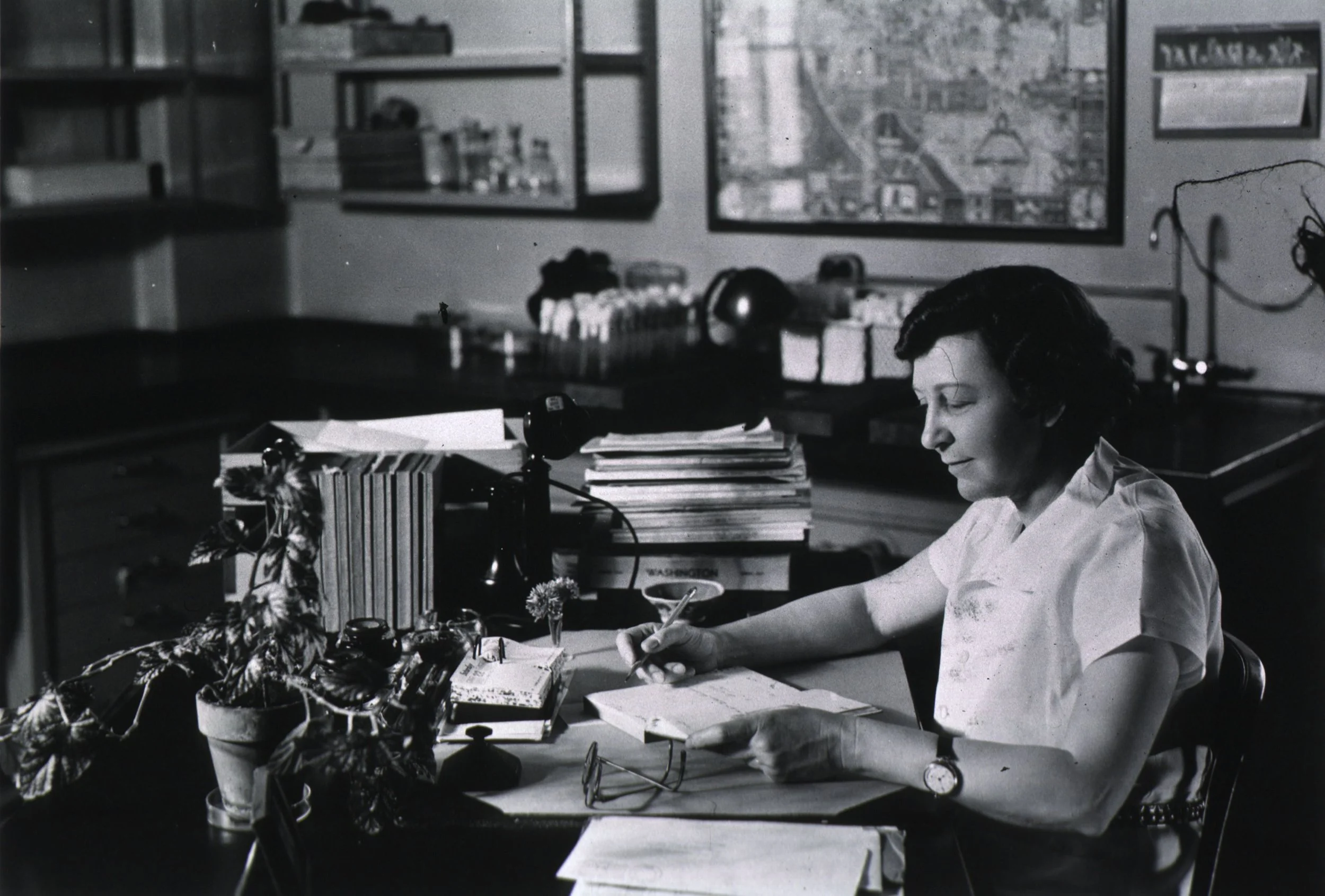
Dr. Sara Branham, in her lab, about 1933
image credit: National Library of Medicine
By the time the Army needed her, Dr. Sara Branham already knew more about meningococcus than almost anyone alive. She'd built the reference framework the field used to classify its strains, set methods that helped diagnostic labs select the best treatment to improve patient outcomes, and built an unassailable international reputation in a field that rarely gave anyone, let alone a woman, that kind of standing.
So in 1941, as the US Army mobilized for a second World War and meningitis threatened to again tear through training camps, Branham was one of six names put forward for the Army Commission on Epidemic Meningitis as essential to the work. It was only on a technicality that she wasn't allowed to officially hold a seat -- her paycheck came from the US Public Health Service, and USPHS employees weren't allowed to sit on these boards -- but it didn't stop the commission from bringing her along as a trusted advisor anyway.
She'd be consulted on every bacteriological question the commission faced during its tenure from 1941-1945, credentialed by expertise nobody in the room could match, without ever holding an official vote. In rooms built for men, in an era that filed her under "distaff" in the field's own official history before it mentioned anything she'd discovered, she got in on the strength of being simply too good to leave out.
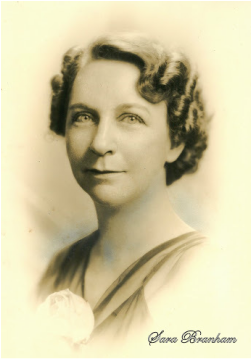
A young Sara Branham, date unknown
image credit: Oxford Historical Society
the making of an expert
Branham built a notable career long before the meningitis work that would become her legacy.
She graduated from Wesleyan College with a biology degree in 1907, at a time when teaching was one of the only professions open to an educated woman. For the next decade she led science classes in Georgia's public girls' schools, but she always sought to expand her education.
So in 1917 she traveled to Boulder for a summer of study, chasing what she'd later call her "ever-growing interest in medical research." The University of Colorado's bacteriology department had just been stripped of many of its own instructors, called away by the war. Six weeks into the course she'd enrolled in as a student, the university turned around and offered her the job teaching it. She took it.
She stayed in Colorado long enough to earn a second degree, a B.S. in chemistry and zoology, before moving to the University of Chicago in 1919 to begin graduate work. She arrived just as the third wave of the the 1918-1919 influenza pandemic burned through the city, a pandemic that killed more people in a single year than the Black Death killed in a century.
At the time, nobody knew the cause of the pandemic. Bacteriologists were split into two camps, some certain the culprit was a known bacteria called Pfeiffer's bacillus (now called Haemophilus influenzae), others convinced it was due to an unknown agent so tiny it passed straight through even the finest filters. The actual answer, an influenza virus, wouldn't be isolated until 1933, so the entire field was working blind, running down hypotheses that would take another fourteen years to resolve.
With that question still wide open, Branham's advisor steered her thesis toward influenza's etiology, and in 1919 she joined a research effort that would eventually produce more than a dozen papers under her name. Her research led to a PhD in bacteriology, and later, an MD, both from the University of Chicago.
After Chicago, Branham joined the University of Rochester School of Medicine as an associate in 1927. She'd barely settled in before the Hygienic Laboratory of the U.S. Public Health Service brought Branham on to investigate an outbreak of meningococcal meningitis that had reached the West Coast.
She was forty years old when she took the job. It became the rest of her career.
an old enemy
Meningococcal meningitis can take a person from a headache to dead within a day. The bacterium lives quietly in the back of the nose and throat, carried by a share of any healthy population without ever causing harm, until, for reasons still not fully understood, it crosses into the bloodstream and then the spinal fluid. Once it makes this jump, the disease moves fast. Typically, it starts with fever and stiff neck, then a rash that spreads across the skin in hours, followed by delirium and then, more often than not, death. This entire process can happen within 24 hours of the first symptom.
Crowded areas are one of the highest risk factors, because the disease spreads through close contact, coughing, sharing cups, and sleeping in the same room. Outbreaks still move hardest through the places where people are packed in tightest, like military barracks, tenements, dormitories, and orphanages. A city could go years without a serious case and then see dozens in a single winter, for reasons that weren't reliably predictable in advance.
Up through the first decades of the twentieth century, the only treatment available was antiserum. To get it, horses were deliberately infected and allowed to develop antibodies. Then their blood plasma was harvested, purified, and injected into patients.
But it only worked sometimes. Potency varied from batch to batch and from horse to horse. Worse, it only worked if the serum matched the specific strain of bacteria causing the infection, and nobody yet had a reliable way to sort meningococcus into strains at all. Doctors gave the patient what they had, as soon as they could, and waited to see if the patient improved.
This was the state of the field in 1927, when Branham joined the USPHS to investigate the outbreak that had reached the West Coast. No one knew why the antiserum that had worked at least in some patients for years was suddenly doing nothing at all.
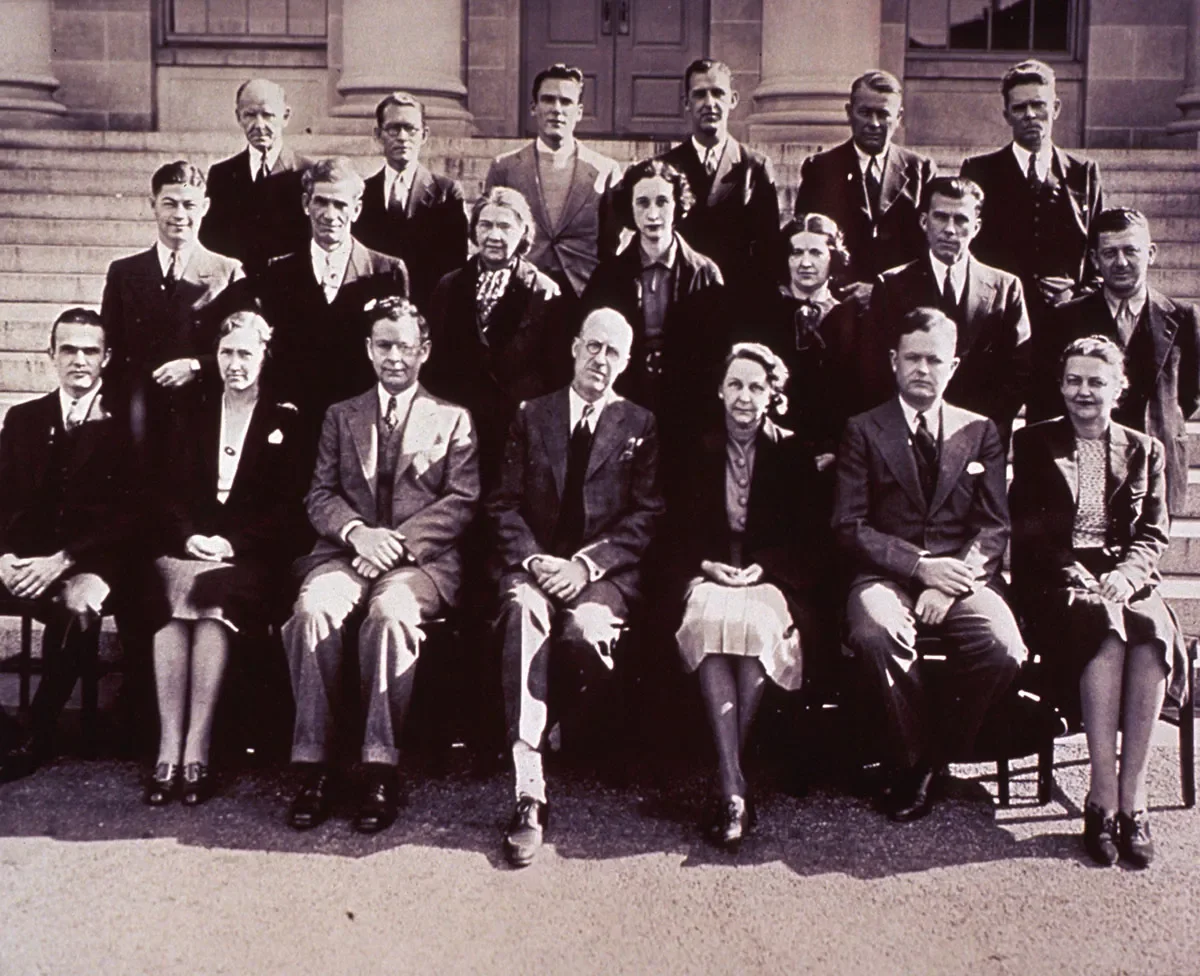
The staff of the National Institute of Health Laboratory of Biologics Control, 1938. Dr. Sara E. Branham, front row, fifth from left.
image credit National Library of Medicine
a new framework
Branham found the answer. Meningitis wasn't just one organism.
She worked it out one culture at a time, isolating samples, testing them against known antibodies, and watching for the precise reactions that separated one strain from another. What emerged was a set of distinct groups within meningococcus itself.
Organisms that looked identical under a microscope but followed different behavioral patterns, and only revealed themselves through exactly the careful serological testing protocols she was developing.
Strain by strain, she built those patterns into a comprehensive reference framework.
In 1937, working with Sadie Carlin, she published a study of every meningococcus strain recovered in the United States since 1930. Then in 1953 she synthesized the full serological relationships among them into a single paper, sorting the entire known landscape of the organism into a coherent structure for the first time.
Her 1958 paper, "Reference Strains for the Serologic Groups of Meningococcus," designated the specific strain that would represent each serogroup going forward, the physical sample every other lab's culture would be measured against when classifying isolates.
The strain she designated for serogroup A, catalogued as ATCC 13077, is still listed today as the official reference strain for that group, sitting in active culture collections nearly seventy years after she chose it.
While the field has since layered far more precise tools like whole genome sequencing on top of her framework, the basic vocabulary she standardized, the letters A, B, C, W, X, Y, Z, is still how the disease and its vaccines get classified, named and tracked. Every current meningococcal vaccine is built on the classification system she spent three decades establishing.
None of that existed yet in 1941, when the Army came looking for exactly the kind of system she would eventually build.
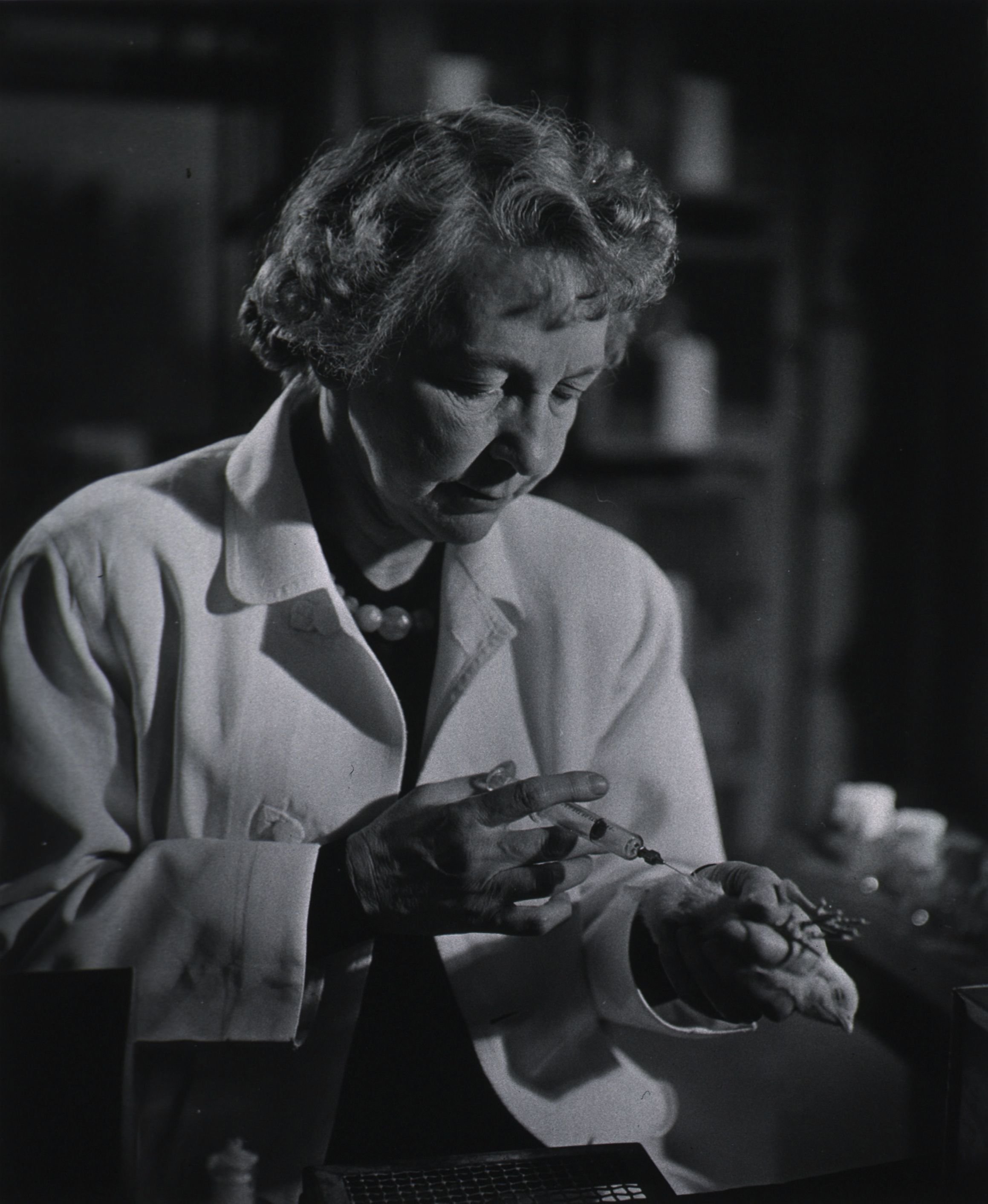
Dr. Sara E. Branham, 1955
image credit: National Library of Medicine
1941
A commission being organized to study epidemic meningitis needed exactly what Branham had spent over a decade building: a working system that could sort an outbreak into its actual components rather than treating it as one uniform enemy.
For the next four years, her classification work fed directly into military doctrine. An official Army medical history of the war later quoted her analysis directly: recent experience, she wrote, had made it possible to foresee a rise in cases by tracking the shift in one particular strain. Her methods became the standard protocol the Army used to anticipate outbreaks across camps holding record numbers of recruits.
The commission's work during those four years rested on the diagnostic foundation she'd built. New treatments like sulfa drugs could finally be matched to the specific strain causing each case, instead of applied on guesswork. Meningitis mortality rates, stubbornly high for twenty years, dropped to a fraction of what they'd been. None of it required her to hold a official vote.
The 1941 memo that spelled out her role never apologized for what it withheld, and it never dressed up what it was doing. Public Health Service employees couldn't sit on the commission, so she wouldn't have a vote. But her judgment was needed anyway, and the men writing the memo said so plainly. Her expertise was indispensable to their work.